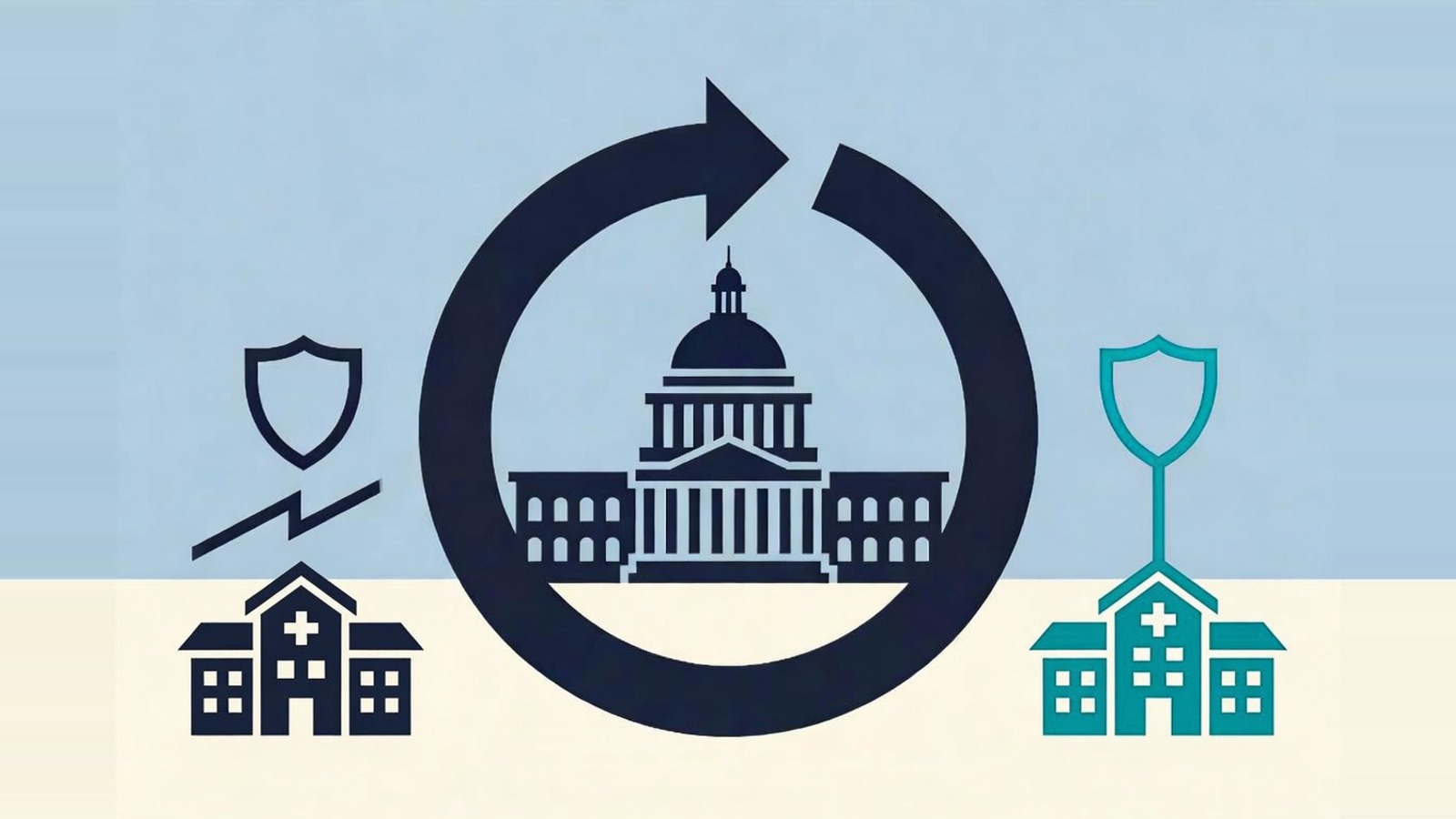
The Break Up Big Medicine Act is bipartisan but doubly wrong. Wrong on the cause of the problem it's trying to solve, and wrong on what the solution should be.
The bill, introduced in February 2026 by Senators Elizabeth Warren (D-MA) and Josh Hawley (R-MO), would force structural separation of healthcare's most integrated organizations; the entities that combine insurance, pharmacy, and providers, under one corporate roof. UnitedHealth Group and Optum. CVS Health with Caremark and Aetna. Cigna and Express Scripts. Humana and CenterWell. The bill's framing treats vertical integration as the disease, but that framing has the diagnosis backwards.
Mark Cuban has been one of the loudest public figures pushing the issues underneath this debate into the mainstream, particularly on PBM pricing and pharmacy supply chain opacity. His concerns are valid. The largest pharmacy benefit managers do operate with too little visibility into how spread pricing, rebate retention, and formulary development work. But the answer that the Break Up Big Medicine Act proposes, organizational separation, does not address those concerns. Forcing common ownership to dissolve does not, by itself, make pharmacy pricing transparent. Likewise, forcing integrated provider-payer organizations to divest dismantles the integration that value-based care explicitly depends on.
We could argue for this bill from self-interest. TRYNYTY is built on the idea that integration between payer and provider, supported by the right infrastructure, is how VBC creates its value at scale. A regulatory environment that forces structural separation would create more demand for our services. The bill would exacerbate the problem we solve, which should be good for our business.
But it is not good for healthcare. The legislators sponsoring this bill have built their reputations demanding the coordinated, value-based, patient-centered care that integrated entities are uniquely positioned to deliver. Then they propose to break up the organizations attempting to produce just that.
What the bill actually targets
Vertical integration in healthcare encompasses a broad range of partnerships and tie-ups. Before going further, it is worth being concrete about what the current debate concerns.
Three common examples of vertical integration help illustrate the conversation. Insurer-PBM-pharmacy combinations: UnitedHealth-OptumRx, CVS-Caremark-Aetna, Cigna-Express Scripts. Insurer-provider combinations: UnitedHealth-Optum Health employs roughly 10% of all American physicians; Humana's CenterWell operates 350 senior primary care clinics serving 600,000 patients. Provider-payer combinations: Kaiser Permanente, Geisinger, Intermountain SelectHealth, UPMC Health Plan, and many others.
For a visual mapping of the major vertical relationships among insurers, PBMs, specialty pharmacies, and providers, the Drug Channels Institute published a useful chart in May 2024: Mapping Vertical Integration of Insurers, PBMs, Specialty Pharmacies, and Providers.
The market share controlled by some of these integrated organizations is significant. The bill's own findings document that more than three-quarters of American doctors now work for corporate entities rather than independent practices. The three largest PBMs adjudicate roughly 80% of US prescription claims. Three wholesalers control approximately 98% of pharmaceutical distribution. These are not speculative concerns about future consolidation. They are the current state of the field.
It is worth pausing here to distinguish horizontal from vertical integration, because the scale figures above describe a mix of both — and the bill conflates them. Horizontal integration is consolidation within the same business line (two hospitals merging, two insurers combining). Vertical integration is combination across the supply chain (an insurer adding a PBM, a provider system adding a health plan). Three wholesalers controlling 98% of drug distribution is horizontal concentration. Optum employing 10% of physicians is horizontal concentration in physician employment alongside vertical integration with UnitedHealth’s insurance business. The Break Up Big Medicine Act targets vertical combinations but applies the same answer to both. That is, in part, why this bill is the wrong answer to the sponsors’ concerns.
The bill’s breadth also captures something its sponsors have not addressed. A prohibition on a parent company owning both a provider and an insurer does not just reach UnitedHealth. On its face, it reaches Kaiser Permanente, Geisinger, and UPMC — provider-sponsored health plans that are among the most studied models of coordinated, value-based care in the country. A bill aimed at conglomerate rent extraction that would also dismantle the organizations closest to the care model its sponsors say they want is a bill whose remedy has outrun its diagnosis. We take up provider-sponsored plans in depth in the next piece in this series.
Why these firms are integrating
Vertical integration in healthcare did not happen spontaneously. It happened in direct response to the regulatory framework Congress put in place.
Start with the Medical Loss Ratio cap. The Affordable Care Act requires insurers to spend 80% to 85% of every premium dollar on medical benefits. The remaining 15% to 20% must cover everything else: administration, sales, technology, member services, regulatory compliance, and whatever operating margin is left over. After these expenses, the margins are razor thin. A bad utilization year can burn through reserves quickly.
The logical response to a cap on insurance margin is to capture revenue downstream where that cap does not apply. That is why insurers acquired pharmacy benefit managers, physician practices, home health platforms, and primary care groups. The insurance entity passes premium dollars to its own provider businesses, which operate under different economics. The question is what the integrated entity does with that downstream revenue once it has it.
When integrated entities use downstream capture to create geographic monopolies and raise prices, that is rent extraction. The regulatory concern is legitimate. But when integrated organizations use their synergies to improve care quality and efficiency, it unlocks value. The integrated entity captures more of total system economics not by raising prices but by lowering the cost of delivering care.
The Break Up Big Medicine Act’s specific transfer-pricing argument is worth taking seriously. The bill notes that integrated insurers can pay their owned provider assets above-market rates while still meeting MLR limits, shifting profits from the regulated insurance entity into unregulated provider segments. That mechanism is technically real, and where internal payments are used to launder margin out of the regulated entity, scrutiny is warranted. But the structure itself is not the abuse. An integrated entity ultimately competes on the premium. If its internal economics inflate cost rather than reward efficiency, the market punishes it at the point of sale. What integration actually makes possible is a value-based structure inside the enterprise: the entity can reward efficient, high-quality care delivery directly, because every dollar saved in delivery becomes margin or premium competitiveness — something adversarial fee-for-service contracting between separate parties has never reliably produced. The right policy response is not to dismantle that structure. It is to judge it on results — total cost of care, quality, and premium competitiveness — and to reserve scrutiny for internal payments that no measure of cost or performance can defend.
The sponsors’ deeper charge is steering: that an entity controlling both the payment for care and the delivery of care will direct patients toward its own assets and foreclose competitors. The concern is legitimate where steering serves the balance sheet rather than the patient — formularies that favor owned specialty pharmacies on economics alone, referral patterns that capture volume regardless of quality. But the same control is what care navigation is. An entity responsible for both the premium and the outcome has the incentive, and the data, capital, and clinical reach, to guide patients toward preventive and proactive care before problems compound — at a scale fragmented competitors cannot match. When that navigation produces a better product than the alternatives, better access and coordination and outcomes per premium dollar, patients choosing it is competition working, not failing. The policy distinction that matters is between steering that serves the patient and steering that merely serves the affiliate. Conduct remedies — transparency into referral and formulary economics, network adequacy standards, audit rights — target the second without dismantling the first. Structural separation eliminates both.
There is one more reason integrated entities are positioned to create value rather than extract rent. As we argued at length in our recent series on value-based care, integrated organizations are uniquely positioned to capture and act on longitudinal clinical data in ways that fragmented competitors structurally cannot. The data substrate that value-based care, AI deployment, and evidence-based medicine depend on is much easier to build inside an integrated organization than across independent ones. This is genuine value creation, and breaking up the structures producing it would set the industry back years.
Where it's working and where it isn't
The question is not whether vertical integration is good or bad. Where does integration create value, and where does it extract rent?
Two quick analogies from outside healthcare make the principle concrete. In December 2025, Boeing re-acquired Spirit AeroSystems for $4.7 billion, twenty years after spinning it off. The reacquisition followed the January 2024 Alaska Airlines door-plug incident traced to missing bolts at Spirit's facility. Boeing framed the move as needing to fully align their commercial production systems including safety and quality management. Separation broke a genuinely shared value chain; reintegration was the recovery. GE recently made the opposite call, splitting into three companies — GE Aerospace, GE Vernova, GE HealthCare — because the businesses were too operationally distinct to optimally manage together. Integration creates value when businesses share a real operational value chain. It destroys value when they do not.
Healthcare is not an outlier. Some integrations create value and others do not.
Humana and UnitedHealth have built downstream integrations into pharmacy, primary care, home health, and related delivery channels to bring clinical care and financial risk closer together. These integrations follow a real operational value chain. The plan’s incentive to invest upstream in member health aligns with the clinical operations actually delivering that care, and the data flows in both directions across what used to be organizational boundaries. None of this holds these organizations out as beyond reproach. UnitedHealth in particular faces ongoing federal scrutiny over its Medicare Advantage risk-adjustment documentation practices — allegations that, if substantiated, are rent extraction by another name. That is the case for sensible regulation, and it is also the case against this bill: the remedy for coding abuse is enforcement and payment reform aimed at coding abuse. Breaking the company apart would not make a single diagnosis code more accurate, and the Break Up Big Medicine Act does not address the practice at all.
CVS-Aetna is a different case study structurally. CVS is a retail pharmacy company that bought an insurer, not an insurer that bought downstream provider assets. The synergies the merger projected in 2018 depended on retail clinic foot traffic, pharmacy data integration with medical claims, and a member experience that would tie the retail and insurance sides together. Those synergies have been harder to demonstrate than the cleaner insurer-into-provider integrations. The lesson is narrower: integration between two structurally different businesses (retail and insurance) is harder than integration where the businesses share an operational value chain (insurance and provider operations).
The broader lesson is that integration structure by itself is not sufficient. The integration premium must be earned through operational execution and through combining businesses that actually belong together. The integrations that work best are the ones operating where the value chain is genuinely shared at the right scale. Increasingly, that means regional systems stepping into the markets that national integrated entities cannot serve profitably.
The clearest current example is the rural Medicare Advantage exit pattern. In 2026, 2.9 million MA beneficiaries are losing coverage as plans exit markets, concentrated in rural and lower-MA-penetration markets. The national carriers are exiting because the unit economics of serving dispersed populations at a distance do not work for them — fixed costs amortize poorly, care management at distance is harder and more expensive, and Star Ratings expose them to local providers with which they have little relationship.
Regional systems with existing rural clinical infrastructure operate on different unit economics because they already have the resources where the members reside. The plans they are competing against do not. Integration of regional provider with regional plan creates value in markets where integration of national insurer with dispersed providers does not — same principle as before: integration creates value where the value chain is genuinely shared.
The integration that this bill would dismantle is the same integration that value-based care explicitly depends on.
What we actually need
The Break Up Big Medicine Act would force structural separation regardless of whether the integration in question creates value or extracts rent, applying the same answer to the integrations that work and the ones that do not. Reform that targets the specific mechanisms of rent extraction is largely correct; reform that breaks up structures producing genuine operational value is not.
Here is the irony. The same regulatory framework that triggered much of the current integration is now proposing to dismantle it. MLR caps and the broader incentive structure of fee-for-service medicine made vertical integration the rational strategic response. The legislators proposing structural separation are responding to consequences of their own framework. The framework they sponsored produced the integration; now they propose to undo the integration without changing the framework that produced it. That is Congress chasing its tail.
Healthcare does not need less integration. It needs better integration. Integration that follows genuine operational value chains: clinical care, financial risk, longitudinal data, and patient engagement combined where the depth creates compounding value. And the kind of reform that targets the specific mechanisms of rent extraction: payment differentials brought to parity where they do not reflect real cost differences, transparency requirements applied where information asymmetry is the actual problem, and performance standards that hold integrated and non-integrated organizations to the same bar.
TRYNYTY's positioning is built on this premise. Healthcare's many moving parts work better when they work together with the right analytical infrastructure underneath. Breaking integrated organizations apart structurally — particularly in markets where the integration is creating value rather than extracting rent — risks accelerating the fragmentation that has held the industry back from value-based care for two decades. The solution to bad integration is not no integration. It is better integration, judged on whether each combination creates value or extracts rent.