Congress Is Chasing Its Tail: The Break Up Big Medicine Act
The Break Up Big Medicine Act would force structural separation of healthcare’s most integrated organizations. It’s bipartisan — and the wrong remedy. Why vertical integration is a response to the rules Congress wrote, where it creates value versus extracts rent, and what reform should target instead. Part 1 of a series on healthcare integration.
Read the analysis →
Provider-Sponsored Health Plans: What Works and What Doesn’t
Provider systems keep launching health plans, and most don’t endure as independent integrated entities. A look at the three waves of provider-sponsored plans, what separates the survivors, and the cultural shift — the hospital learning to stop being a hospital — that most often decides the outcome. Part 2 of a series on healthcare integration.
Read the analysis →
Healthcare's Next Decade: Vicious or Virtuous Cycle?
Healthcare has spent two decades half-assed attempting or outright resisting value-based care. The headwinds are no longer something the industry can ignore. The capstone to a series on the infrastructure healthcare actually needs — the framework for value creation, what it produces once it's running, and why finding a starting place matters more than perfecting the plan.
Read the capstone →
Value-Based Care Generates the Evidence Base Healthcare Needs
Evidence-based medicine and value-based care should be working together. They're tripping over each other instead. A look at why — and how VBC organizations are uniquely positioned to generate the longitudinal evidence base healthcare has been waiting on for decades. Part 3 of the series on the infrastructure healthcare actually needs.
Read the analysis →
You Can't Move Care Upstream by Dropping People Back Above the Rapids
Most of what the healthcare industry calls "moving care upstream" is just reactive care made more efficient. A look at what genuine upstream care would actually require — the economics, the data, the culture, and the engagement models that have to change first. Part 2 of a trilogy on the infrastructure healthcare actually needs.
Read the analysis →
We Need Better Intelligence in Healthcare Before We Can Make It Artificial
Healthcare AI works in radiology and drug discovery. It's failing at population health for one structural reason: the data foundation isn't ready. A look at where AI delivers, where it doesn't, why CMS's plan to AI-infer risk adjustment by 2031 is built on the same broken substrate, and what "intelligence first" actually means.
Read the analysis →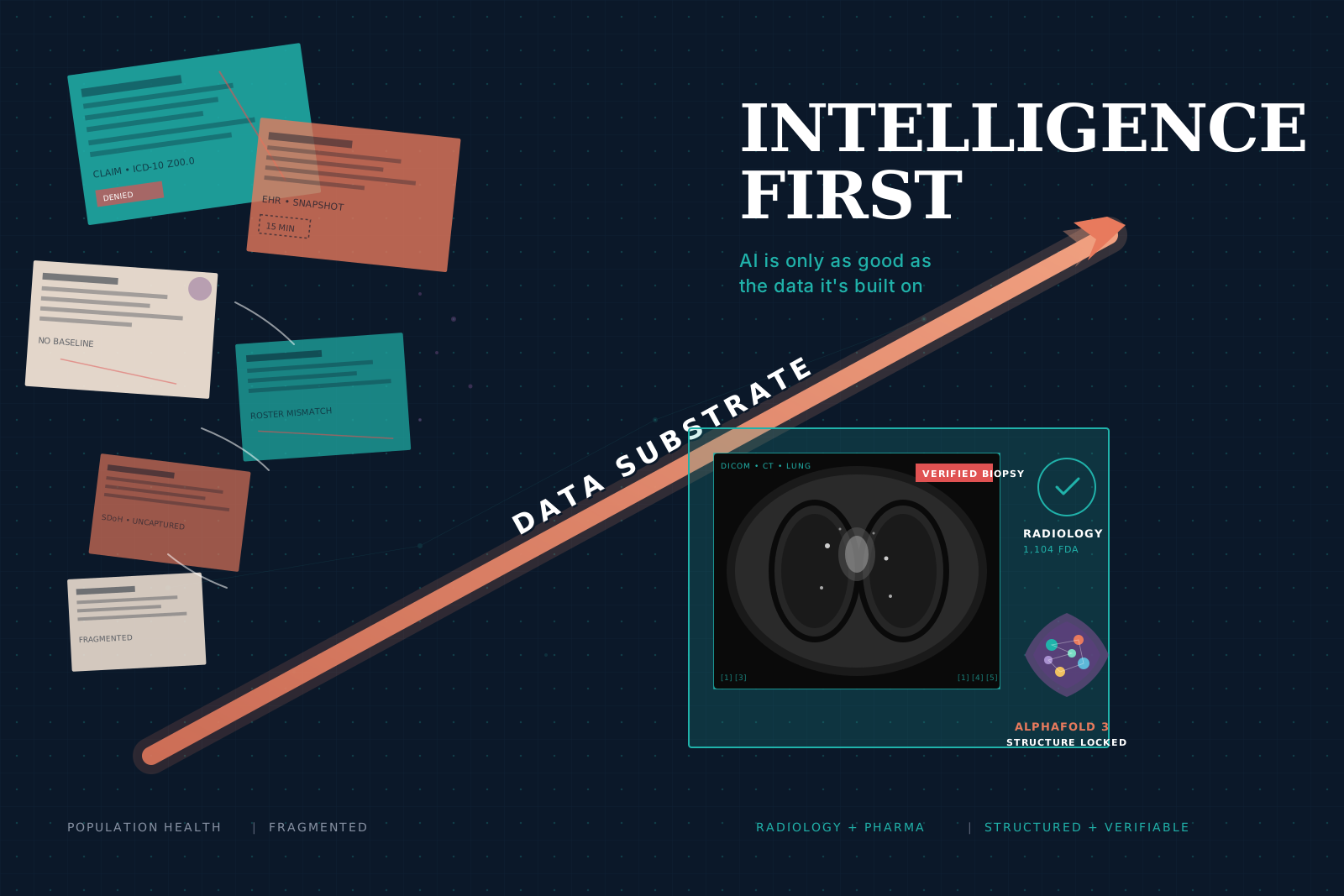
Let's Get Honest: Healthcare Has Trust Issues
The root cause of nearly every dysfunction in U.S. healthcare — skyrocketing costs, clinician burnout, administrative bloat, chronic-disease mismanagement — is a breakdown of trust between patients, providers, payers, employers, and regulators. A fifteen-year practitioner's view on how we got here and what rebuilding looks like.
Read the essay →Three Years of ACO REACH: What the Data Actually Shows
ACO REACH generated $1.48 billion in shared savings across 150 ACOs. Here's what the data reveals about who succeeded, why configuration mattered more than effort, and what it means for LEAD.
Read the analysis →From V24 to V28 to 2027: How CMS Risk Adjustment Policy Keeps Getting It Wrong
A three-year retrospective on CMS risk adjustment policy — what was warned in 2024, what changed between the Advance Notice and Final Rule, what actually happened in the market, and what the 2027 trajectory means for ACOs and value-based providers. The predictions proved out. The structural problems remain.
Read the full analysis →What 12 Years of MSSP Data Tells Us About Long-Term ACO Performance
A data-driven analysis of 12 years of MSSP results across 1,000+ ACOs — what separates consistently high-performing organizations, what the COVID era revealed about VBC resilience, and what it all means for the LEAD Model decision. Built on the full 2013–2024 Public Use File dataset.
Read the analysis →Five Operational Barriers to Value-Based Care — And Why They Form a Vicious Cycle
The biggest obstacles to VBC success aren't clinical — they're five deeply interconnected operational barriers that form a self-reinforcing cycle. Misaligned incentives, administrative overload, poor data, reactive care, and patient disengagement don't just coexist. Each one makes the others worse.
Read the analysis →The LEAD Model: CMS's Most Ambitious ACO Program Yet
The Long-term Enhanced ACO Design Model launches January 2027 — with a 10-year term, no rebasing, concurrent risk adjustment for high-needs patients, and beneficiary engagement incentives that no prior ACO program has offered. Applications close May 17, 2026.
Read the overview →
Earlier
1 article · archived
Show
Earlier
1 article · archivedCMS's Proposed Risk Adjustment Changes Are Contradictory to the Agency's Own Goals
The original 2024 analysis: why CMS's proposed CMS-HCC model changes were built on a misreading of the evidence, how they conflated correlation with causation, and what the downstream consequences would be for value-based providers and the populations they serve.
Read the original analysis →Get new analysis in your inbox.
When we publish new analysis on Medicare Advantage, MSSP performance, or value-based care strategy — you'll be the first to know. No noise, just signal.